Snakes have fascinated scientists and nature enthusiasts for centuries. From tiny burrowing species to enormous serpents capable of reaching astonishing lengths, these reptiles demonstrate one of the most remarkable evolutionary success stories in the animal kingdom. Their ability to adapt to different environments — from deserts and forests to wetlands and even oceans — has helped them thrive for millions of years. But what allows certain snake species to grow so large while others remain small? The answer lies in a combination of evolutionary speed, environmental conditions, and biological advantages that make snakes uniquely adaptable.
The Remarkable Diversity of Snakes
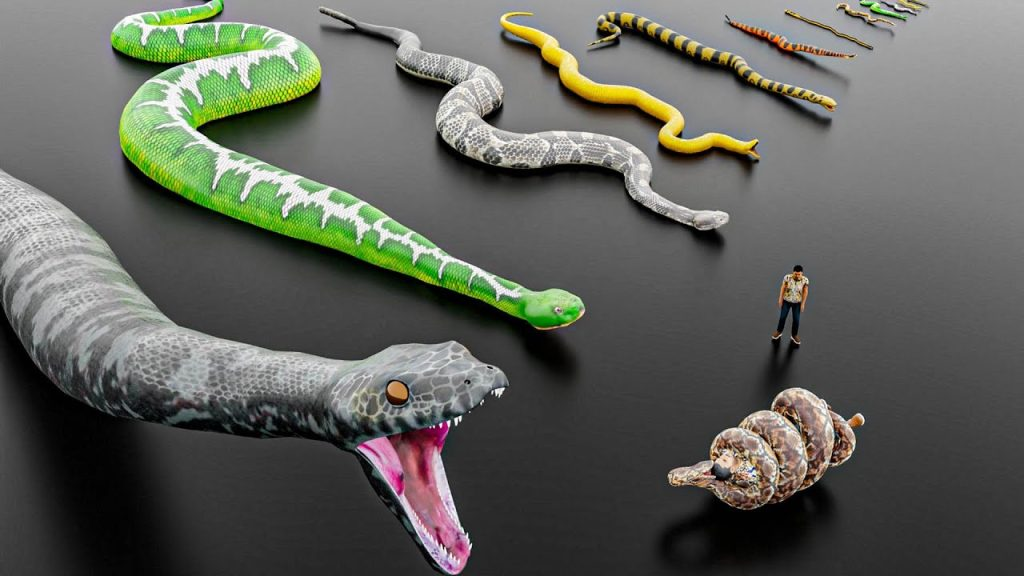
Today, scientists recognize roughly 4,000 species of snakes around the world. They vary dramatically in size and lifestyle. Some species, like thread snakes, are only a few inches long and spend their lives burrowing underground. Others, such as green anacondas and reticulated pythons, can grow several meters long and become dominant predators in their ecosystems.

Throughout history, snakes have demonstrated an impressive ability to evolve into different ecological niches. Fossil discoveries reveal that ancient snake species were sometimes even larger than modern ones. Prehistoric giants such as Titanoboa and Vasuki indicus reached extraordinary sizes, rivaling the length of a bus.
Snakes vs. Lizards: A Faster Evolutionary Path
Scientists have long wondered why snakes appear to adapt so efficiently compared with other reptiles. To better understand this, researchers examined over 11,000 reptile species, including both snakes and lizards.
Using genetic analysis and fossil records, researchers discovered that snakes may evolve up to three times faster than lizards. Their evolutionary journey began roughly 128 million years ago, but rapid diversification occurred during the Cretaceous period, when many animal groups were undergoing dramatic changes.